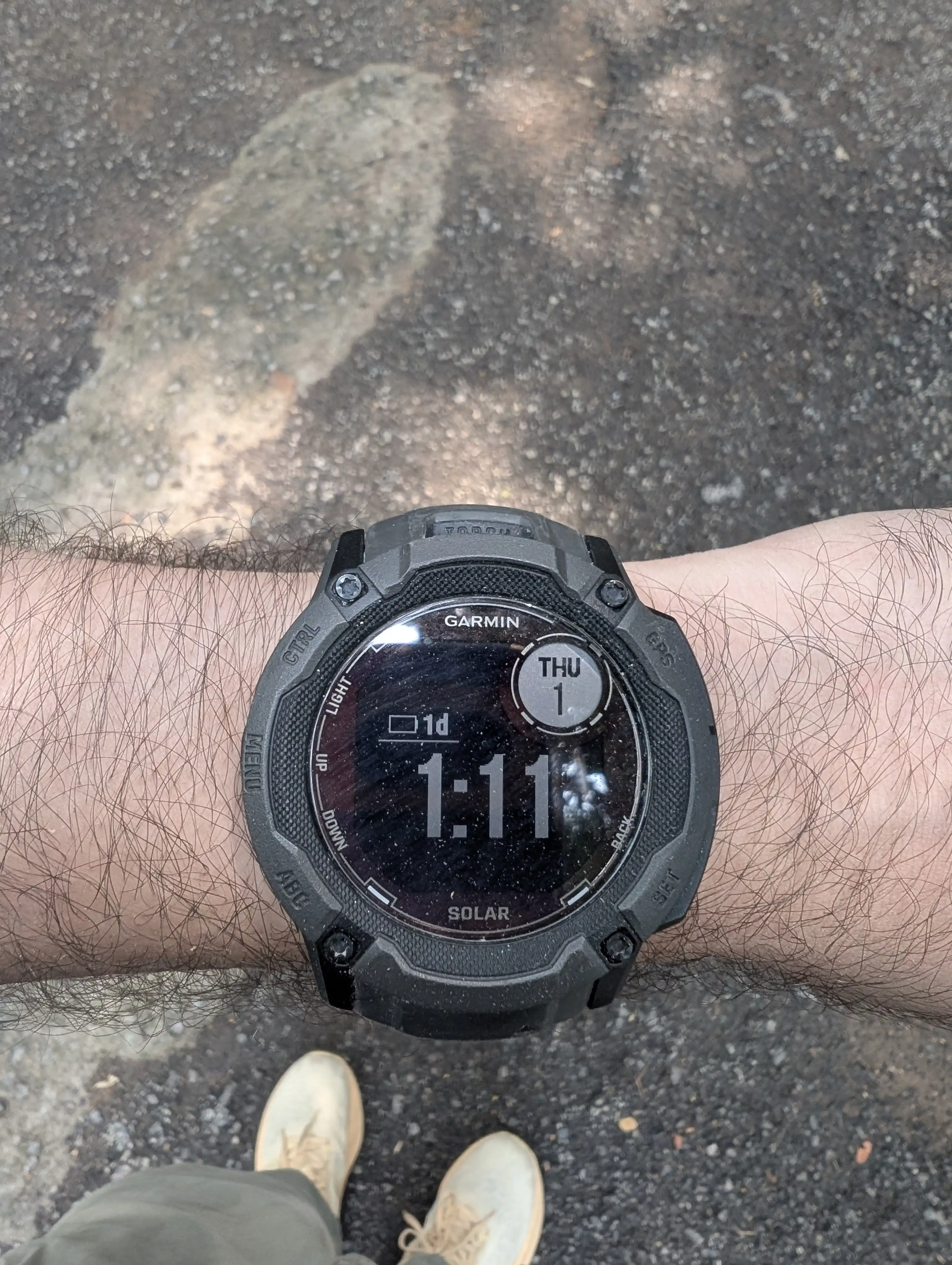
Woodworking 🪵🪚
Why, Where, and How
I was in Bengaluru for a few months, looking for something to do/learn. I wanted to try something different, so I searched for training classes for table tennis and swimming. I found a few but they seemed a bit expensive. I wasn't too sure about the quality of those classes as well. Incidentally, my friend was also looking for "things to do", and he found a woodworking course in Bengaluru! I thought I could also make some furniture for the house, and if not at least pick up woodworking as a skill.
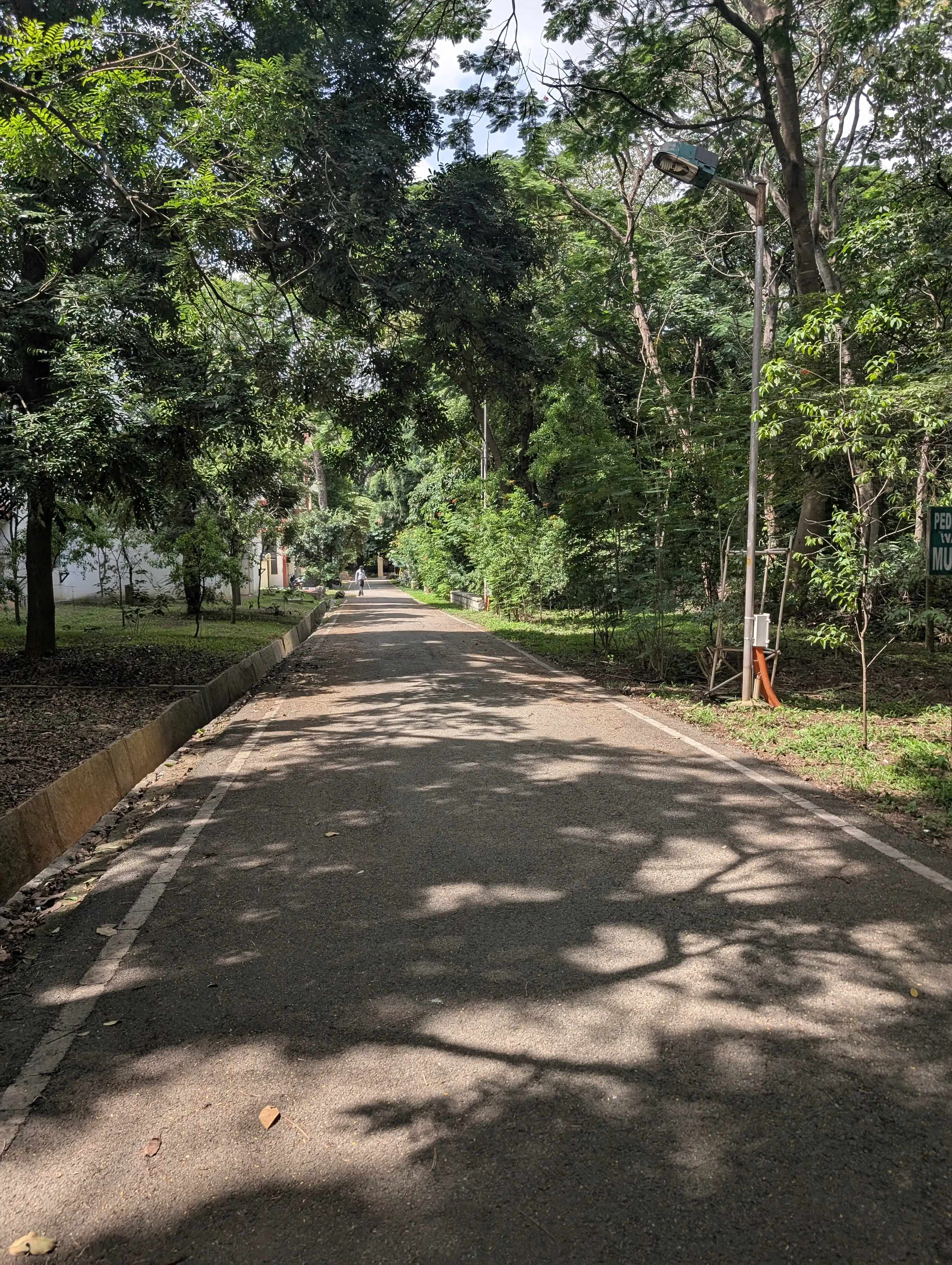
The way to AWTC. On the right is a forest. |
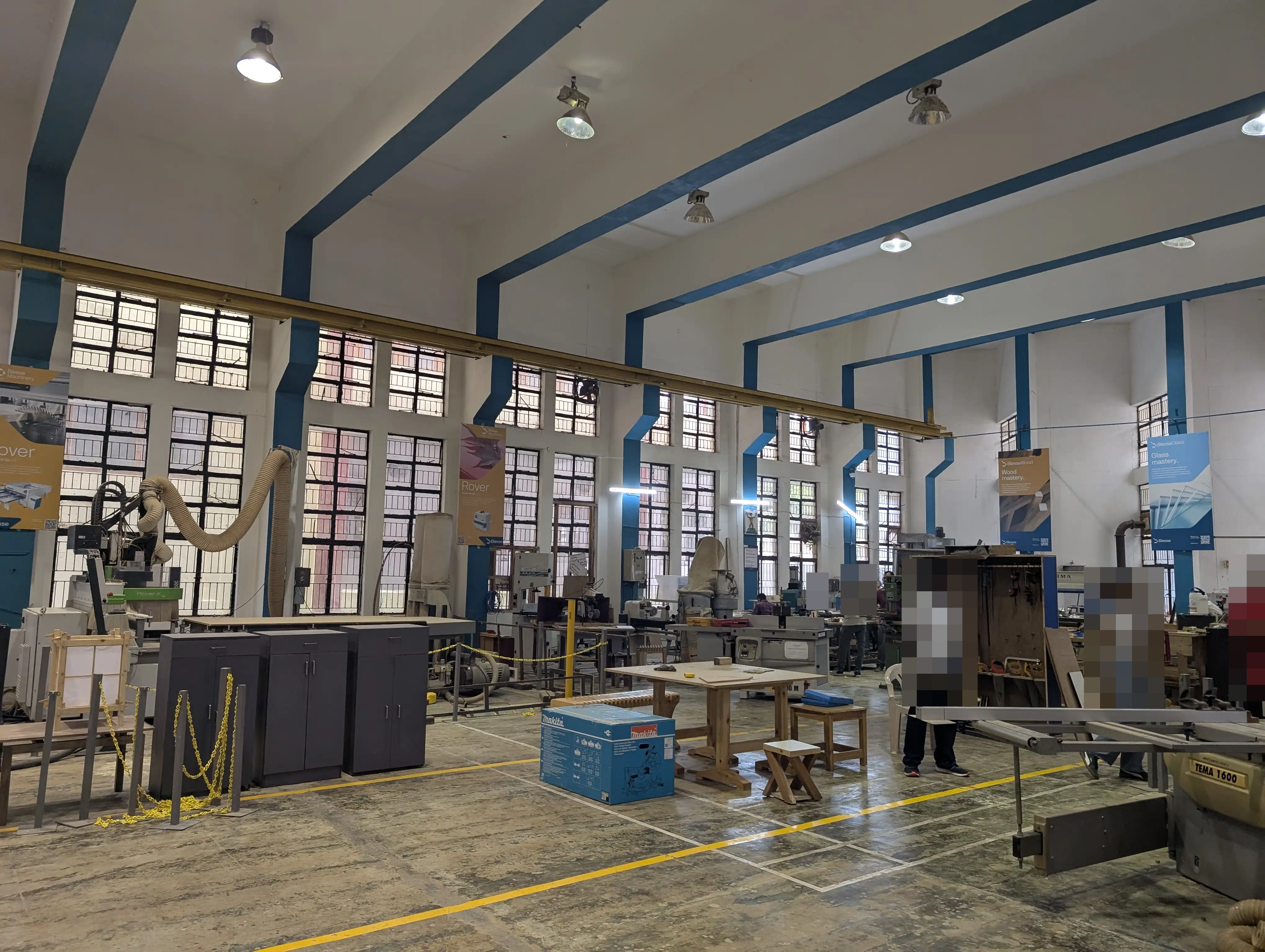
AWTC workshop |
The course is run by AWTC (Advanced Woodworking Training Centre) [1], which is a part of IWST , a research institute. It is a monthly course (approximately 20 days excluding holidays). I attended the September batch. The workshop where you actually make things is inside the beautiful IWST campus, surrounded by a forest which is also the source for Pine, the wood used in training. The larger campus is situated in Malleshwaram, which I found surprisingly walkable compared to the rest of Bengaluru. At the time of writing this article, two short term courses (one-month) courses are offered, one is solid woodworking and the other is panel processing. I chose the former one, which is what I'd advice others to start with too.
The application process is quite simple. Fill a form, submit the documents, and pay the course fee (25000 INR at the time of writing this article). [2]
Learnings
Tools
I learned a lot of things, to say the least. I am not used to working with my hands, which is ironic because I wrote code for a living. One of the first tools I got introduced to was the plane. I struggled initially with it, a lot. It still remains the tool I find the hardest to use. There are many moving parts in the plane - the blade, the chip breaker, depth adjustment screw, etc. All need to be in the correct position to use the plane properly. Whenever I adjusted one thing, something else would move out of position. This became frustrating at times.
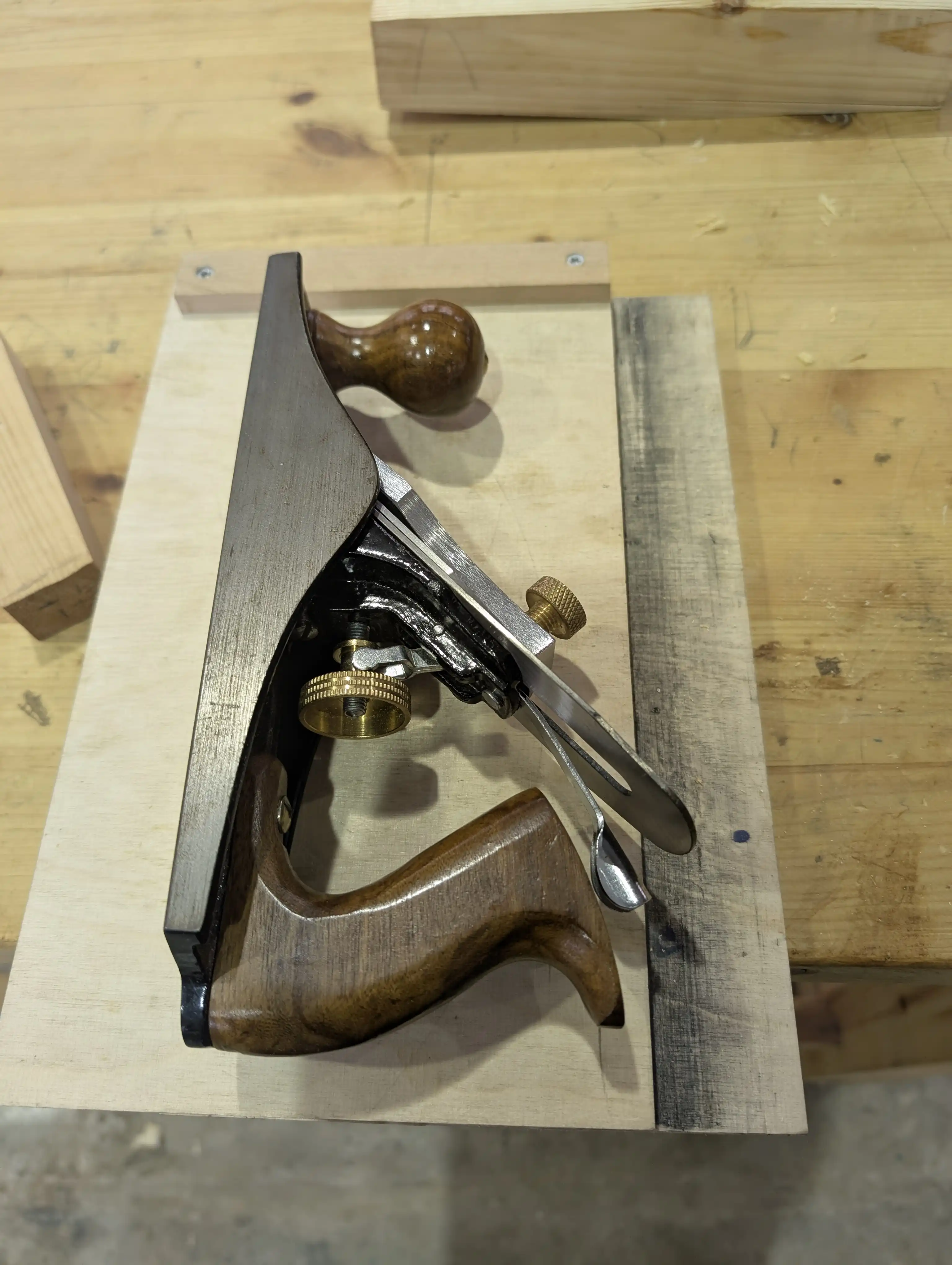
A plane sitting on a shooting board.
I learned how to hold, and of course, use a chisel. I might have skipped on the "how to hold" part because I cut my hand the very next day because I was holding it wrong. I've never seen that much blood in my life, so I got terrified, just a little bit :) After this incident though I started using it correctly, and it became my favorite tool (only when it was a sharp one).
I also learned how to sharpen a blade [and chisels]. This I enjoyed a lot for some reason. Grinding metal on diamond and water stones felt very satisfying, and oddly felt like I was a professional. This might be partly because those sharpening stones are quite expensive and not readily available in India. The ones I was using were from US and Japan. The anticipation of passing the paper cut test [3] was also exciting, maybe even more exciting than the sharpening process, maybe...
I learned how to cut using a saw. The one I ended up using the most is the Japanese Dozuki.
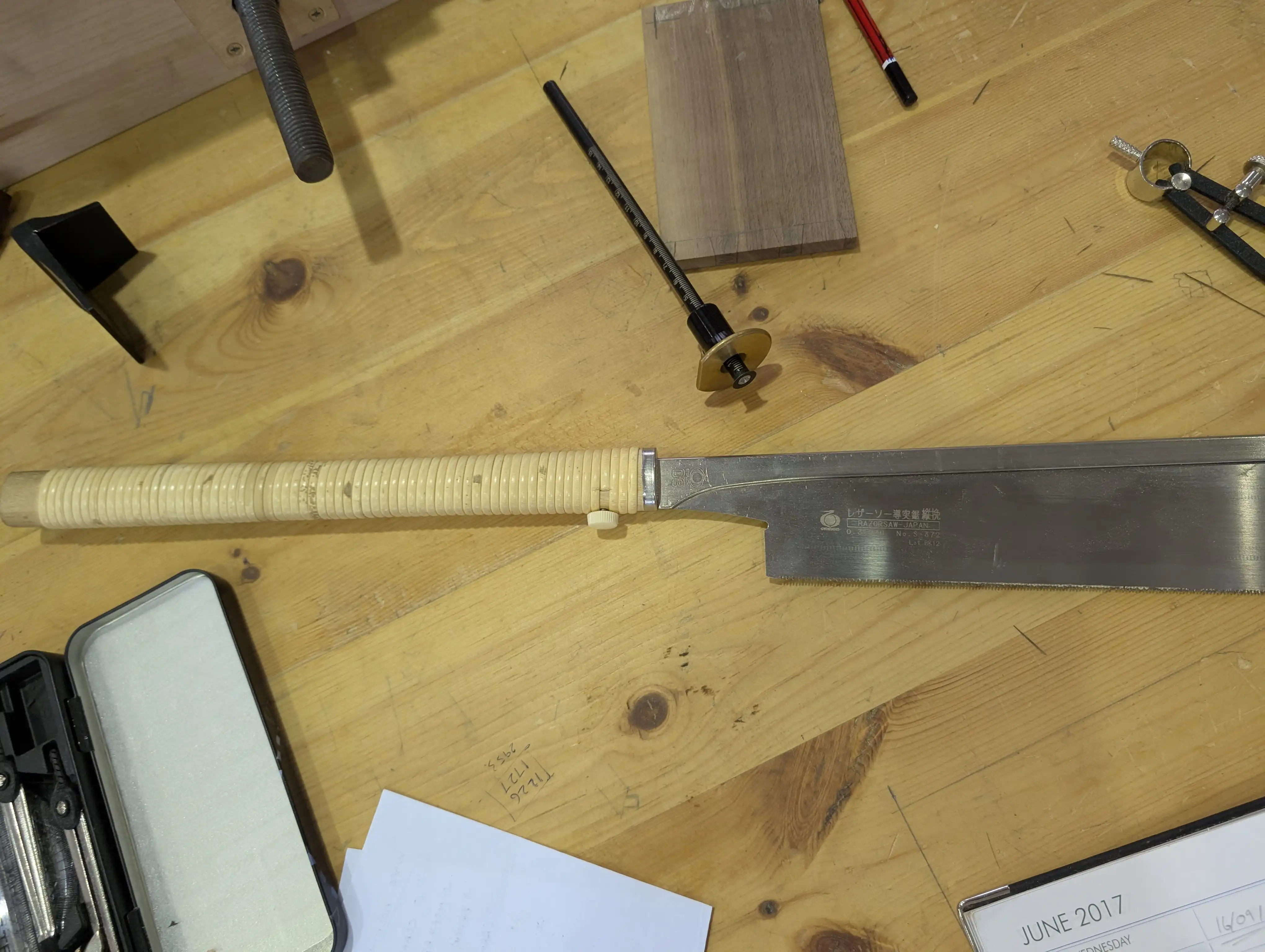
A Japanese Dozuki
Joinery
I learned two joints, mortise and tenon, and dovetails. Of the two of them, I focused more on dovetails. My project was a dovetail organiser box, so it made sense that way too. Dovetails are very technical joints, there is a peculiar process to make them by hand. After the trainer showed me how to make them, I thought I had memorised it. The next day when I tried to replicate them, it seemed I had no idea! It helped that I had made notes and written a step-by-step guide on how to make them immediately after the trainer explained the process.
There are two parts of the joint, tails and pins. The joint is called a dovetail because of the tail part, which looks like a dove's tail. Initially I struggled with both, but after a bit of practice I found it easier to make the tails, and to cut them so that the cut would come out of the saw, as they say. The pins were much harder to make, because they had to be based on the shape of the tails made prior, and I always seemed to have problems fitting the tails and pins.
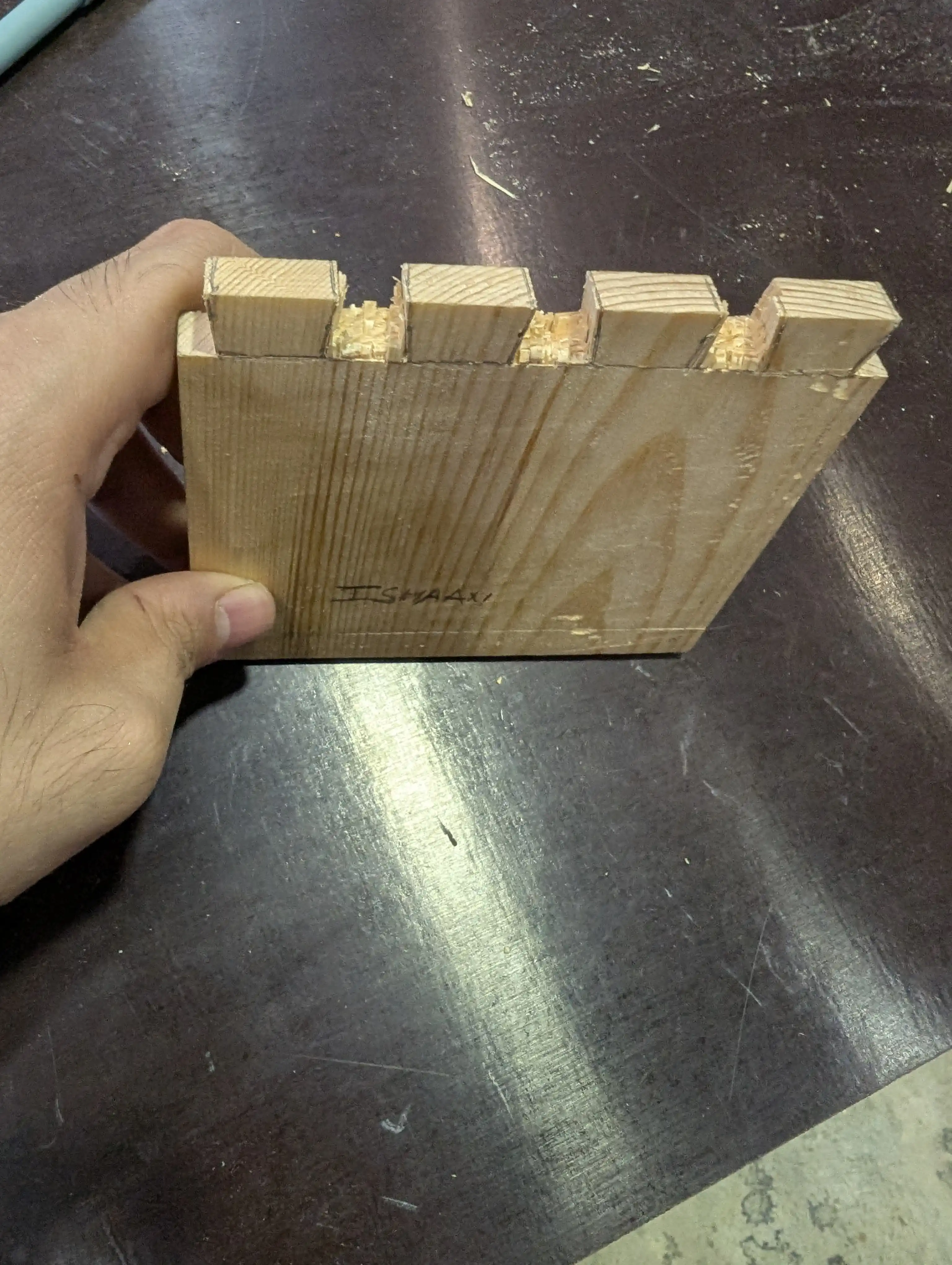
My first dovetail attempt, unfinished, quite bad to be honest, all kinds of issues... |
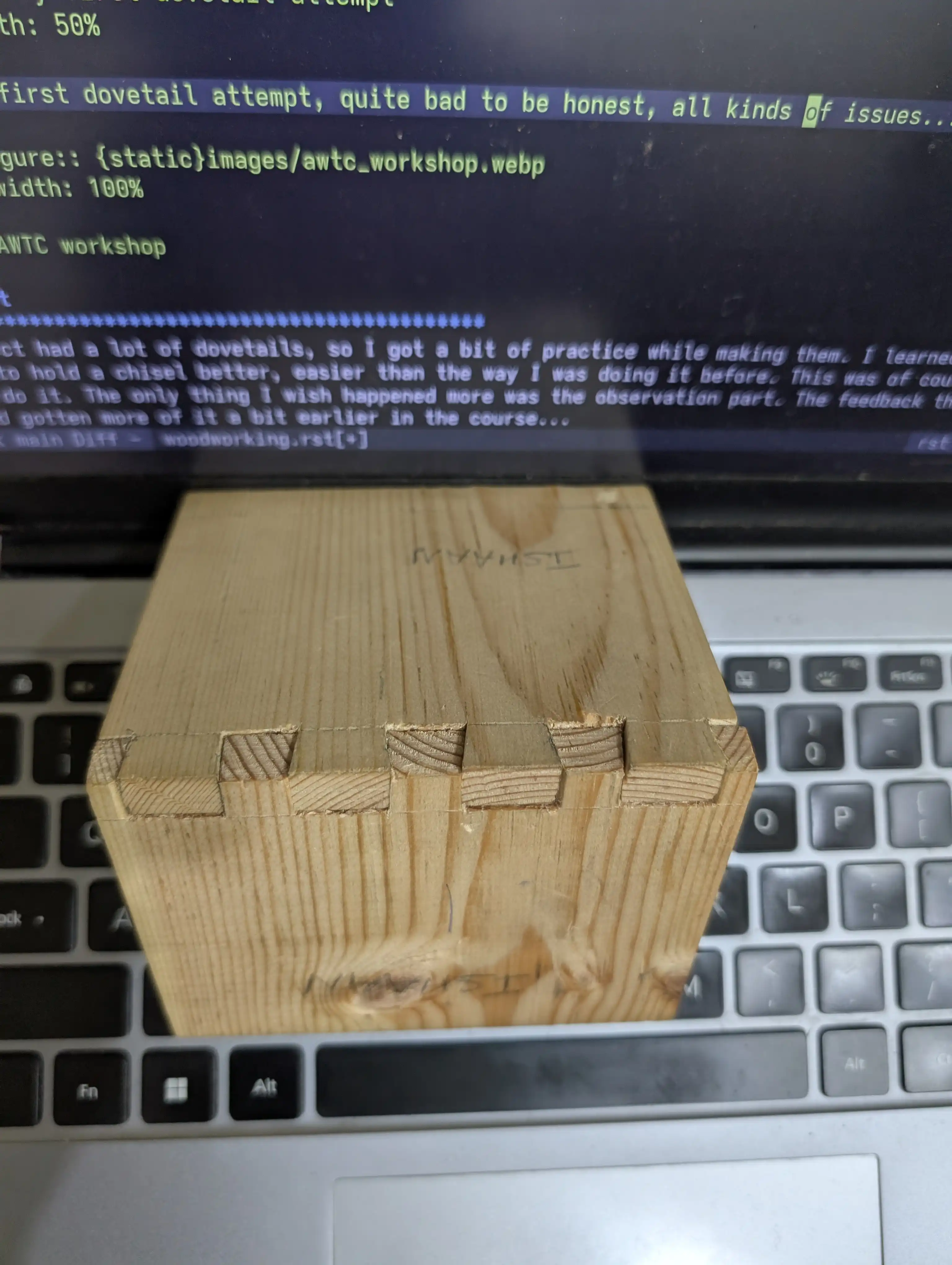
The whole joint with the pins, looks okay after a bit of work. |
My Project
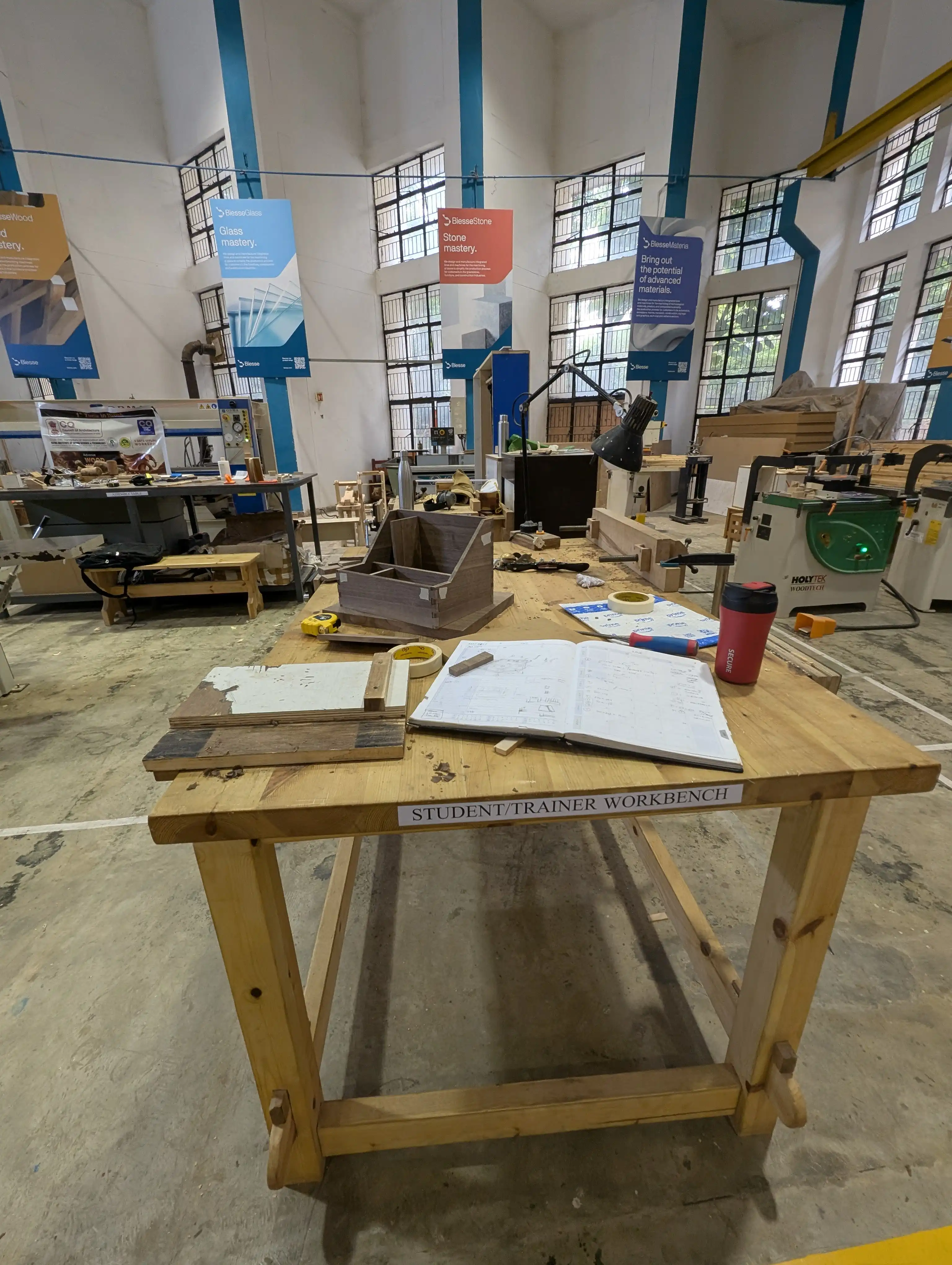
My project (a walnut box) had a lot of dovetails, so I got a bit of practice making them. I learned how to hold the saw better, learned how to hold a chisel better, easier than the way I was doing it before. This was of course because the trainer was observing me do it. The only thing I wish happened more was the observation part. The feedback that I got was very valuable, I wish I had gotten more of it a bit earlier in the course...
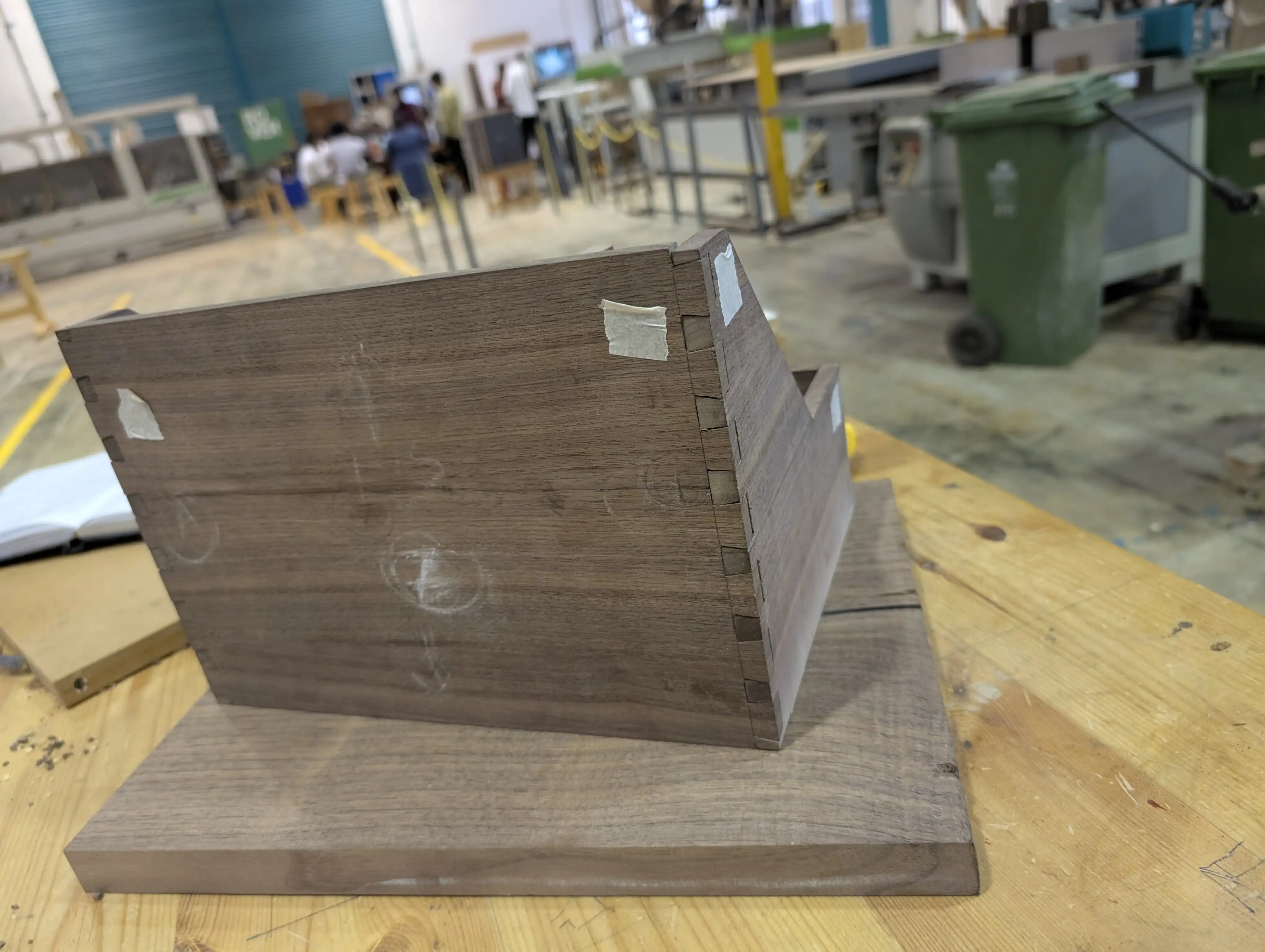
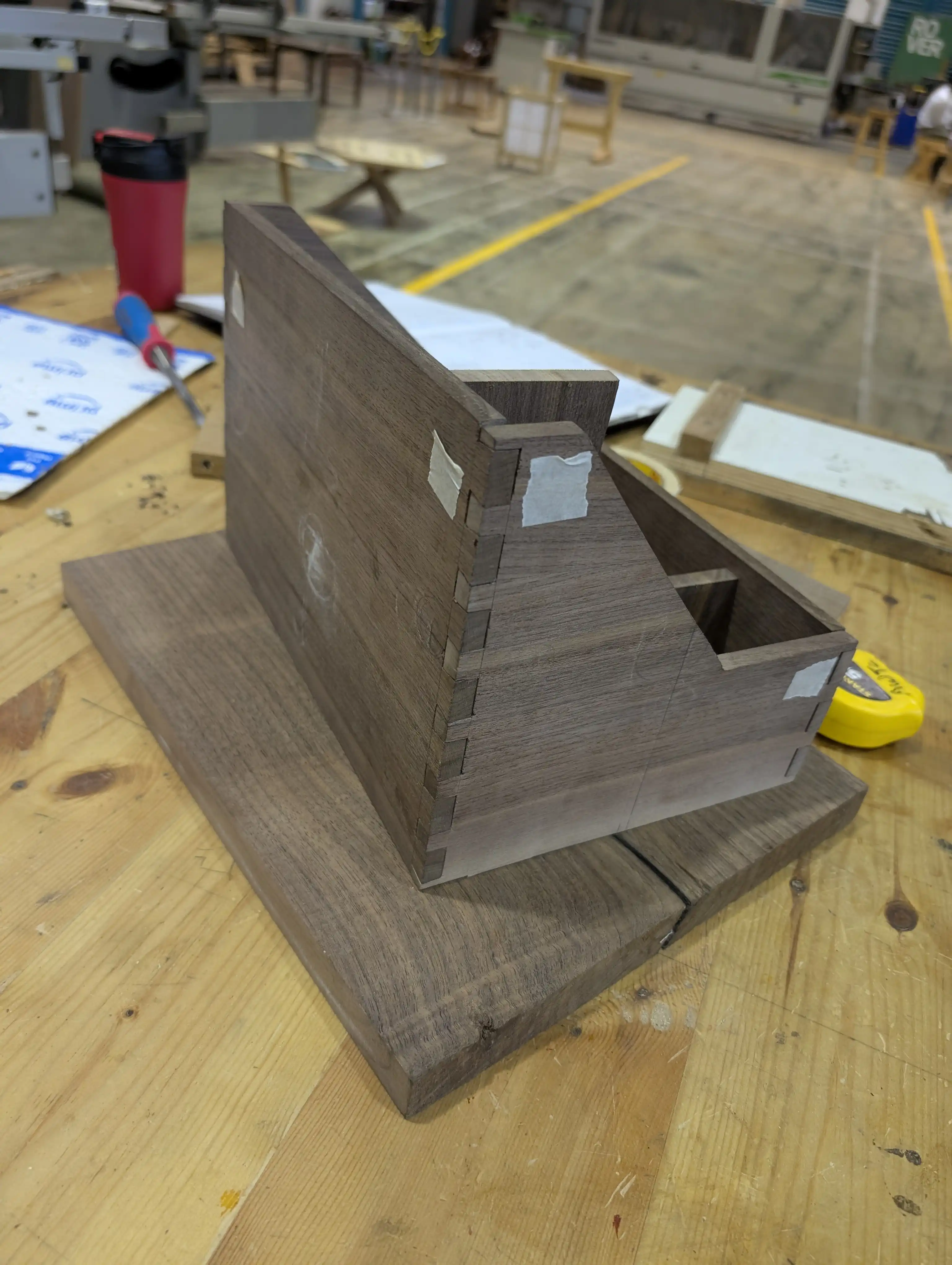
Below is a dump, in order, of the things I did for my project. In the end I was not able to complete the box due to lack of time, but I thoroughly enjoyed my time at the workshop. Although sometimes I might have gotten frustrated, I did enjoy the experience of making something with my own hand, from a design on paper, to something physical. Quite extraordinary!
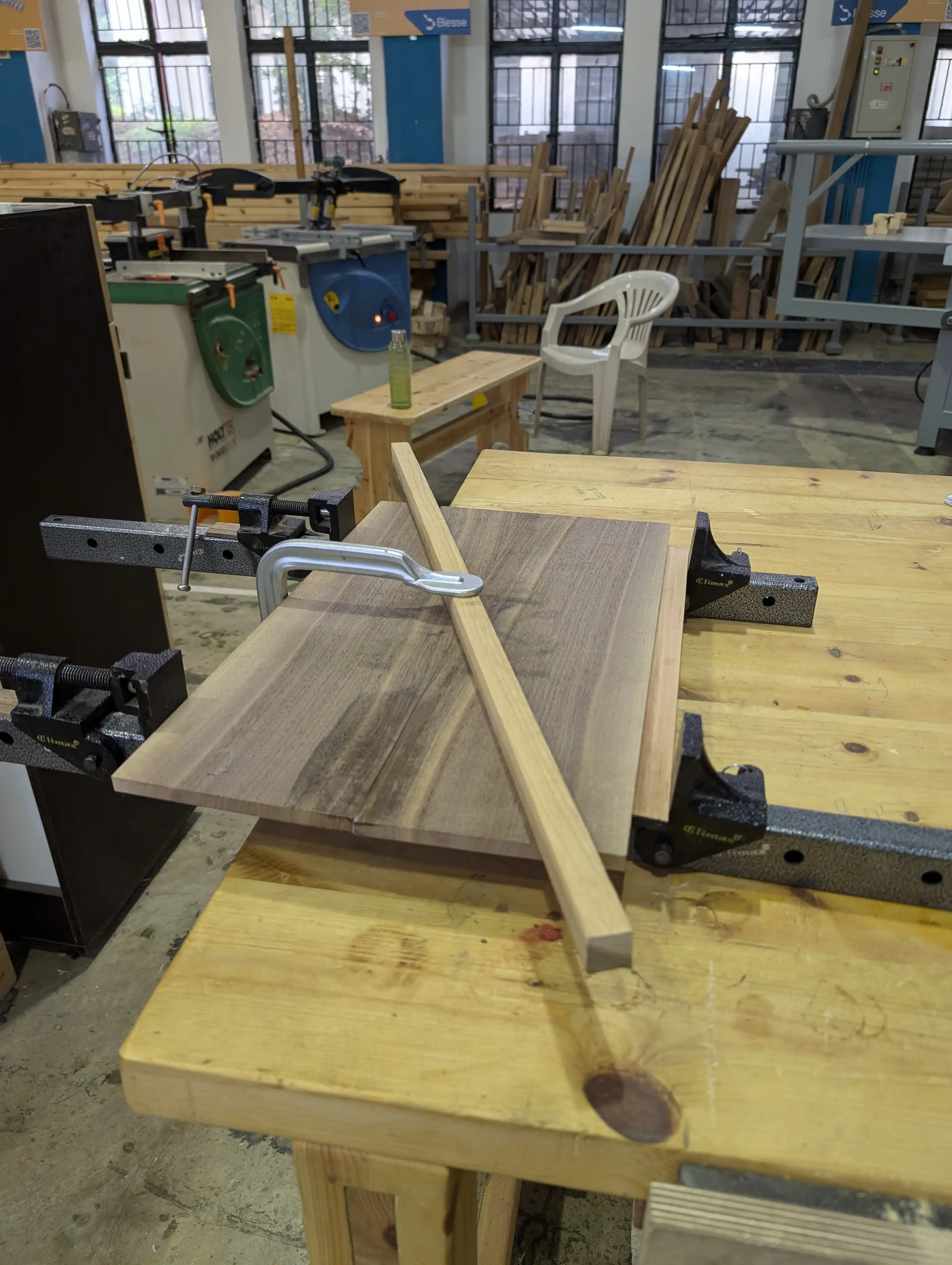
Glued walnut pieces held by clamps.
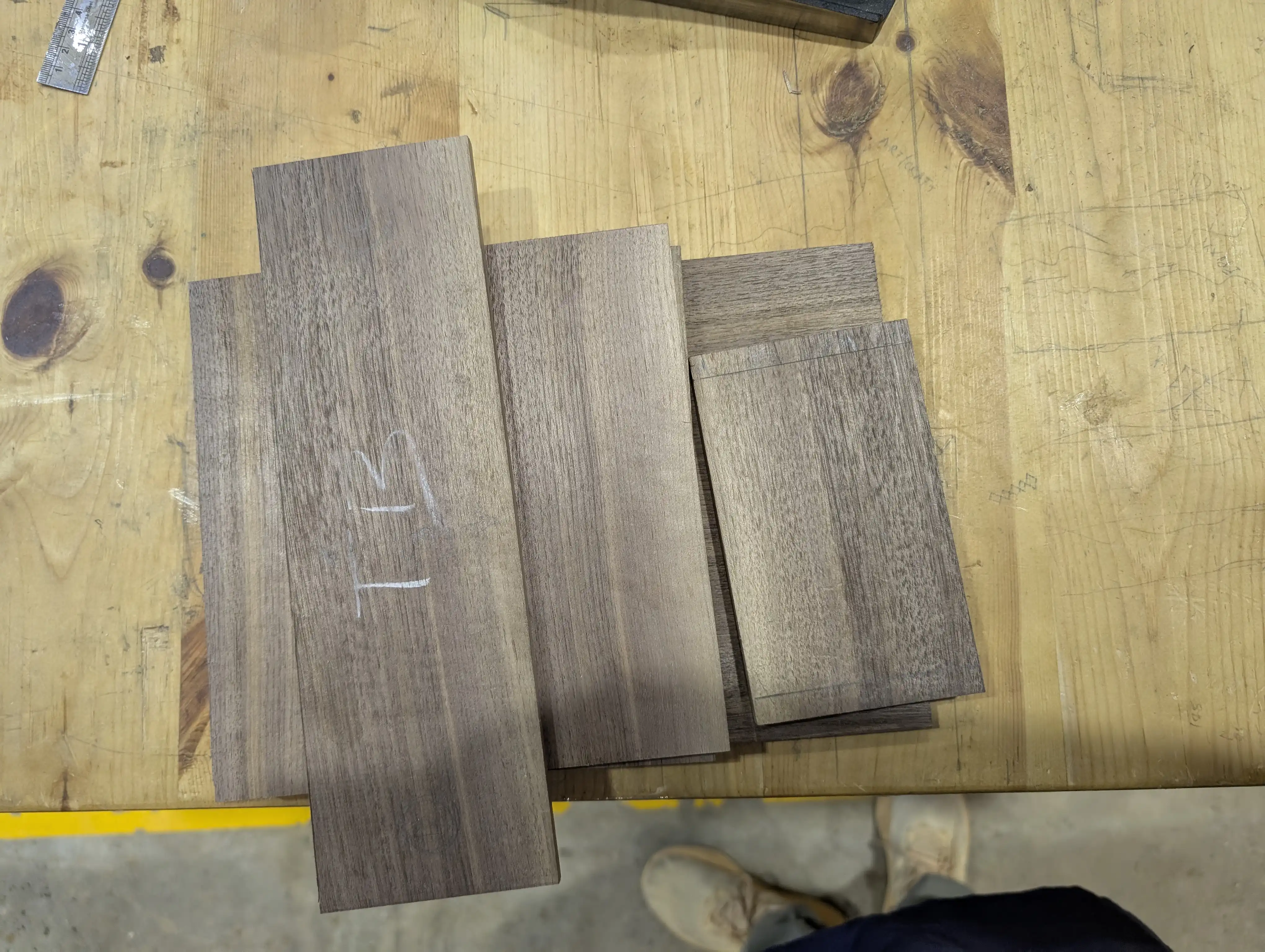
Cut walnut pieces on a workbench.
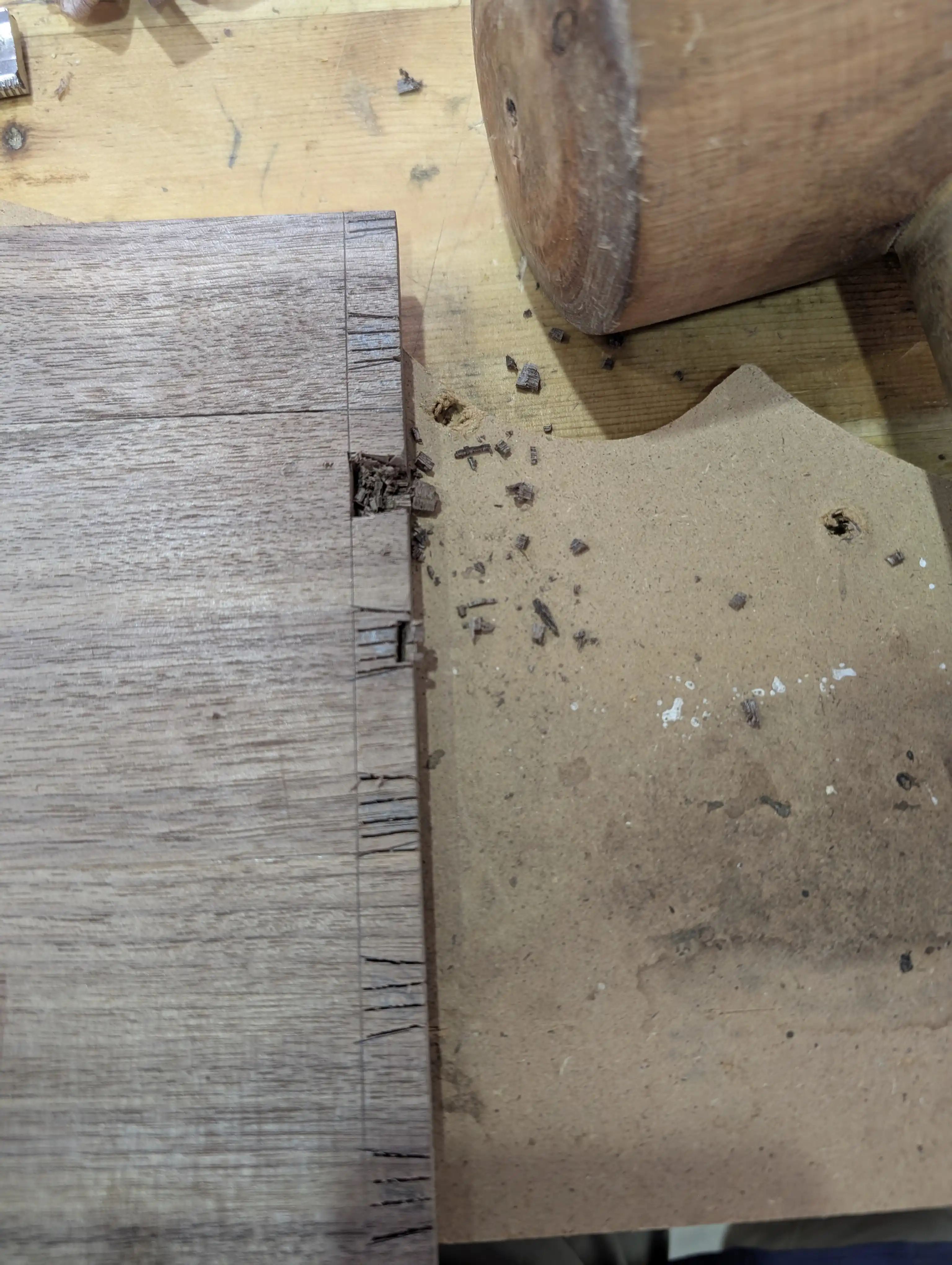
Making tails using a chisel and a mallet. The piece was cut using a saw earlier.
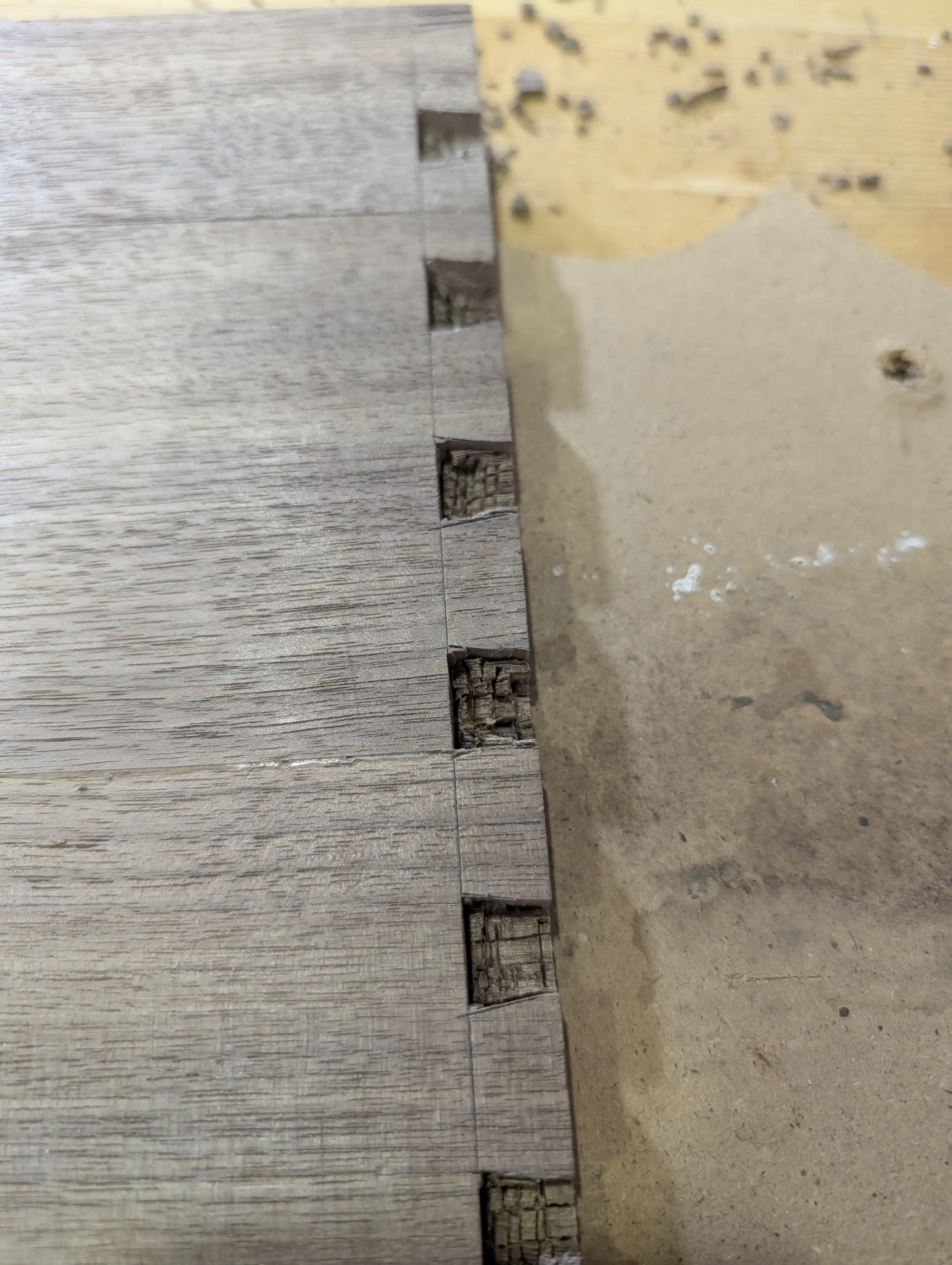
Partially cut tails using a chisel.
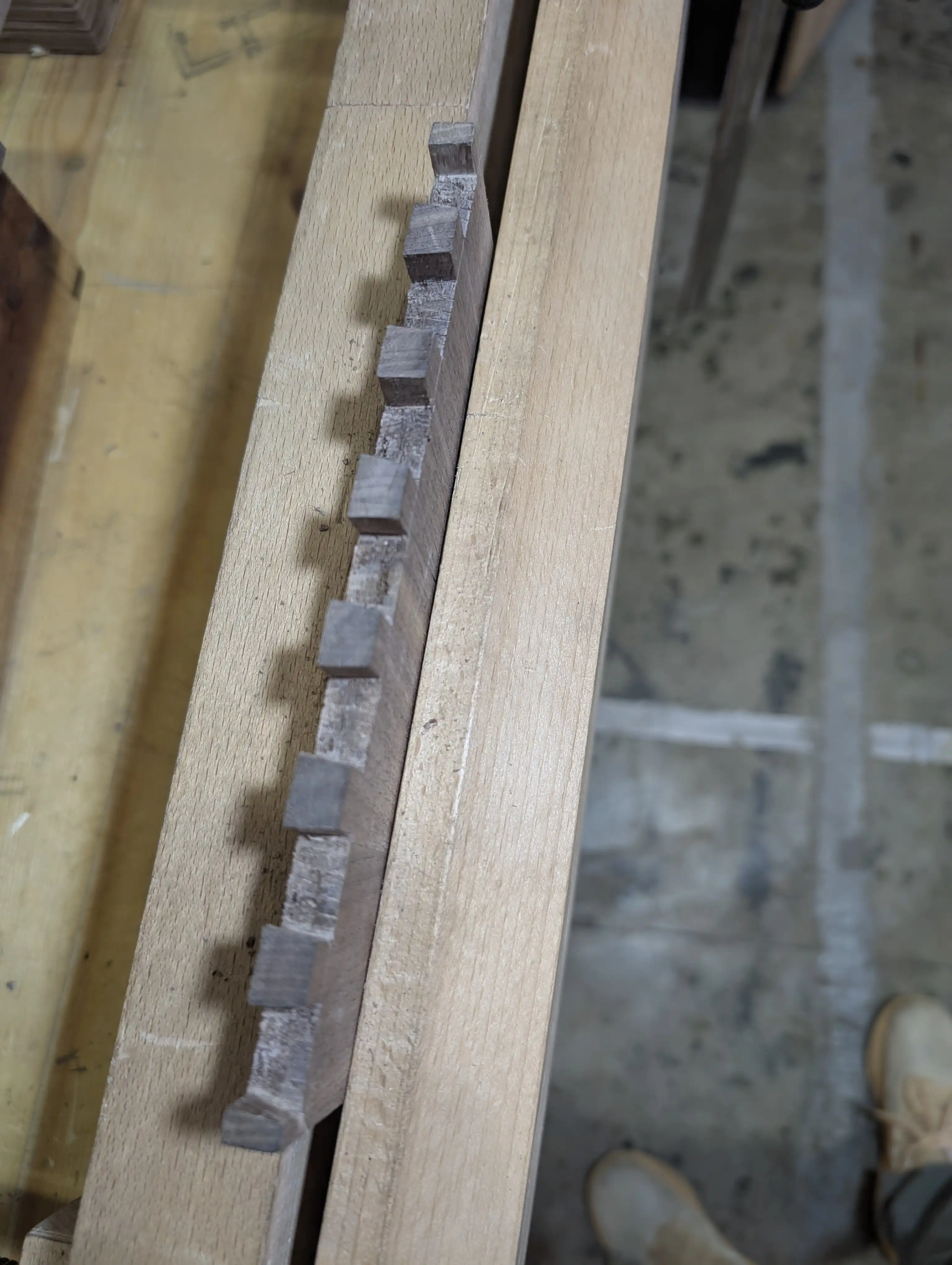
Fully cut and finished tails.
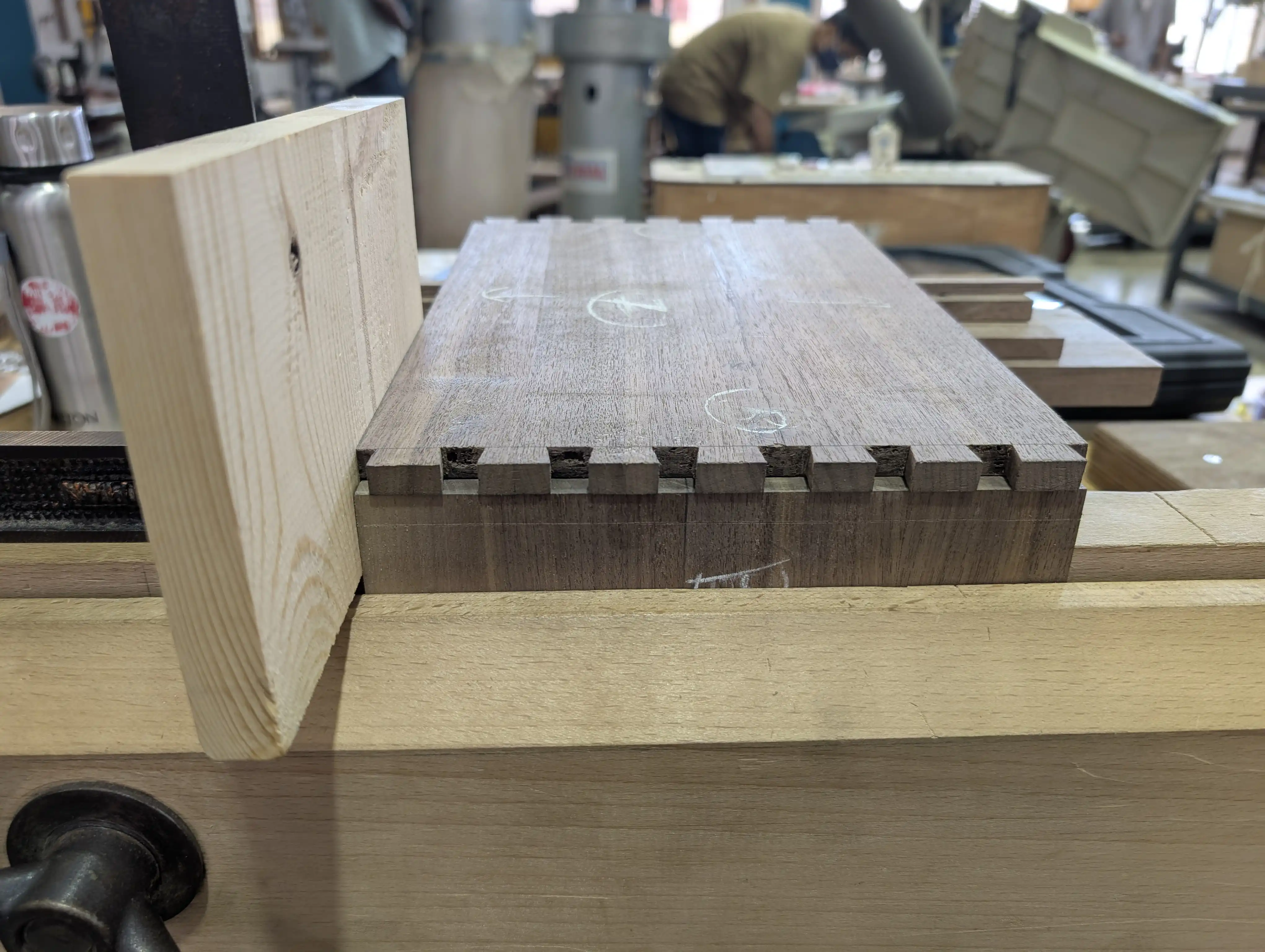
Marking pins using tails.
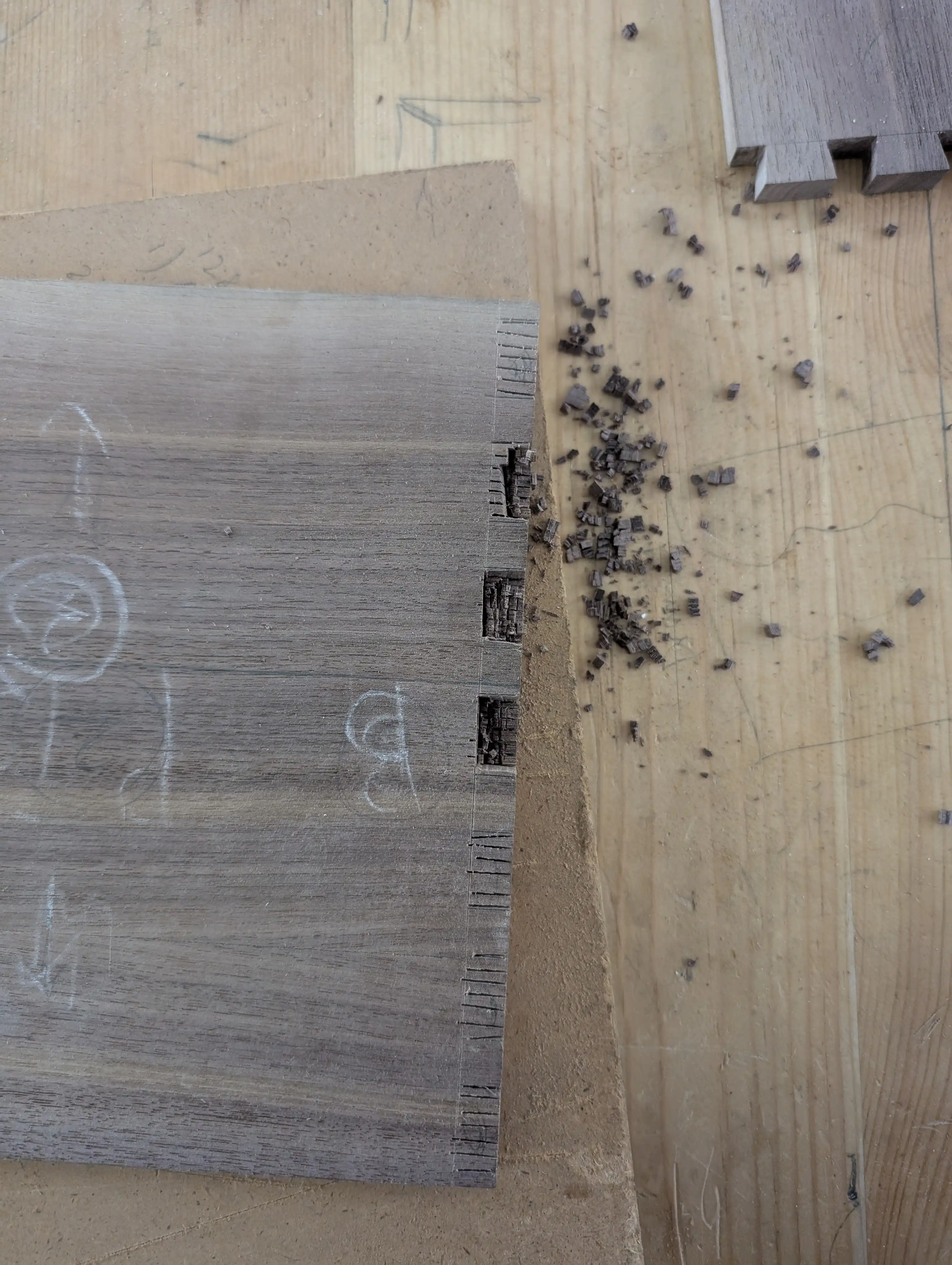
Partially cut pins using a chisel.
A Walnut box - my final project
|
|
Footnotes
| [1] | I also added AWTC to OpenStreetMap 😬: https://www.openstreetmap.org/node/14163355635 - one of the few places in Bengaluru I found worthwhile to visit at least once. |
| [2] | Before making up my mind about the course I called at the IWST contact number. I was then referred to one of the trainers at AWTC. He suggested me to visit the workshop once before making the decision which I did. There he explained about how the course would proceed for both solid woodworking and panel processing. He also gave a brief summary of the tools and machines I would be using. |
| [3] | One of the tests to see if a blade is sharp enough is the paper cut test. If you're able to cut a piece of paper without resistance, and the cut is a sharp line, you pass the test. |
| [4] | A very weird thing happened to me one day while leaving the IWST campus, it happened by chance and is almost worth sharing here: |